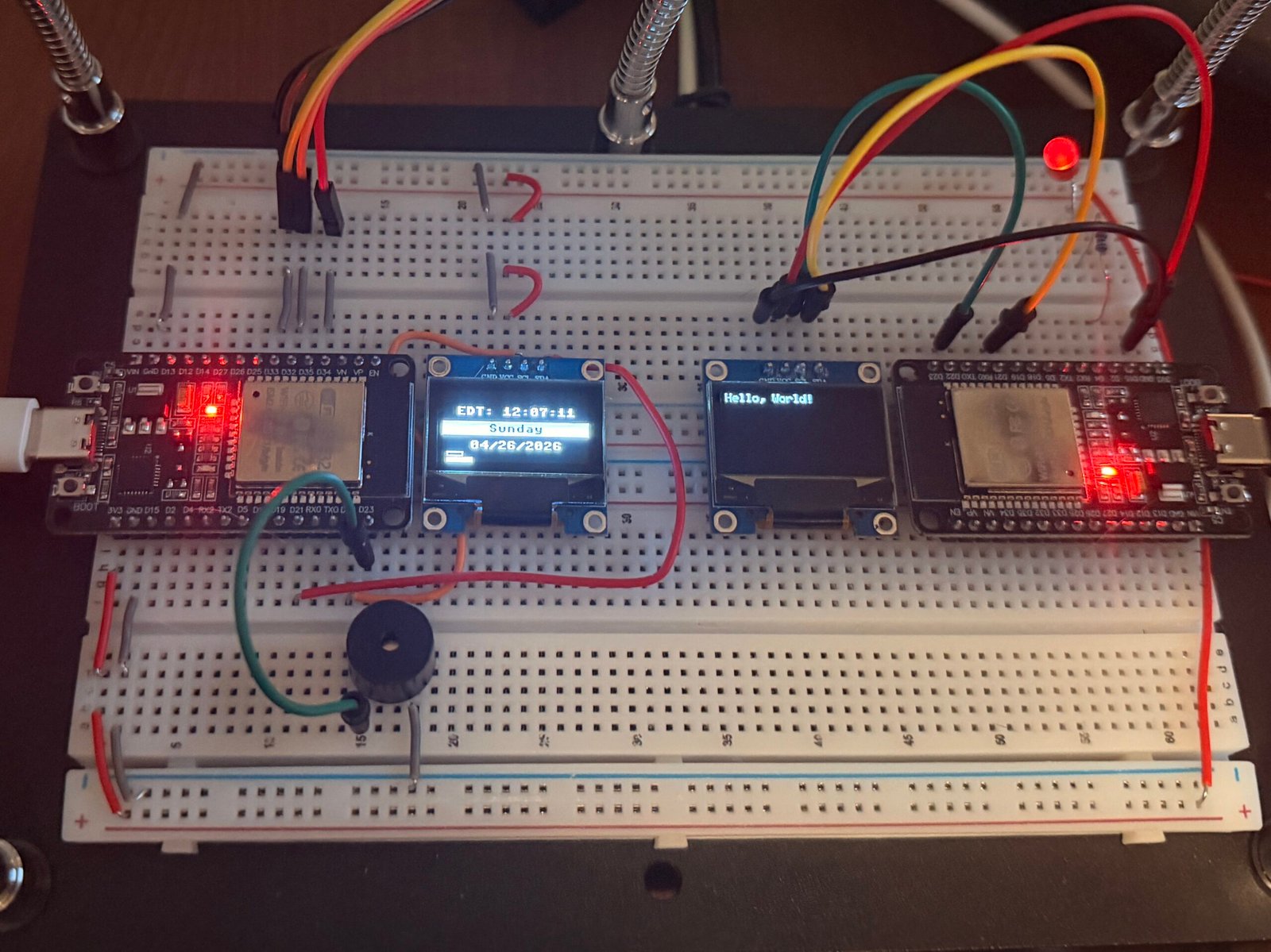
oled on arduino esp32
It is surprisingly challenging to get these little OLED displays working for the first time on a microcontroller. A few contributing factors to the complexity are:
- The OLED display isn’t made/furnished by Adafruit, and it appears Adafruit has a strong presence in the maker community for drivers for these displays.
- While the Arduino IDE supports ESP32s, the microcontroller pins do not align 1:1. As a result, example code and physical wiring often requires tweaking to work.
- The platform chosen will dictate which programming languages are supported. The language you choose will impact which drivers are required. You may choose to write your program in Micropython, Circuitpython, or C++, or another language. Your choice here can make your journey more or less complex.
If you are looking for the easiest path forward, I suggest working with an Arduino board and a display purchased from Adafruit. I, of course, am too stubborn to do things the easy way.
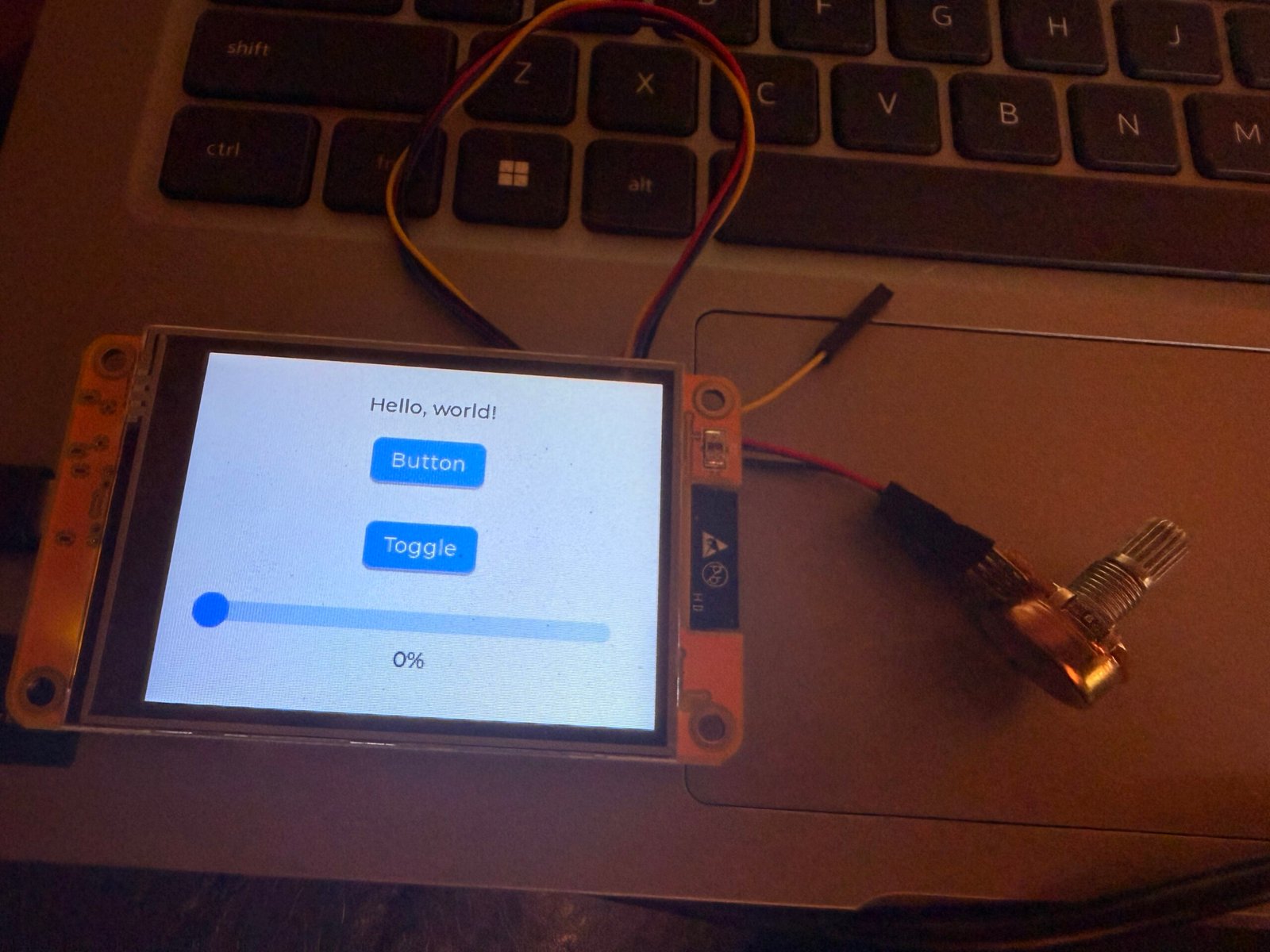
The feature image for today’s post shows an SSD1306 display working with an ESP32 running my clock app (on left). On the right is an ESP32 running Arduino C++ sample code to display Hello World on a second SSD1306 over I2C.
After several hours….Now that this is working, I can move on with more experiments. On the short list is getting the SH1106 display working on the same setup. I want to use the SH1106 for retro gaming.

Post Comment